~ Precision Turned Fasteners and Fittings Manufacturing in the UK ~
Key Highlights
- Rotec Aerospace supports UK manufacturing of precision turned fasteners and fittings made to drawing.
- Parts are produced on sliding head CNC machines for repeatable precision and efficient multi-step machining.
- Materials include aluminium, stainless steel, titanium, mild or carbon steel, brass or copper, and nickel superalloys.
- The business serves aerospace, space, motorsport, rail, automotive, oil and gas, agricultural, military and industrial supply chain needs.
- Quality support includes AS9100, ISO 9001:2015, CMM inspection and traceability.
Introduction
When you are buying made-to-drawing fasteners or fittings, you need more than a low unit price. You need stable UK manufacturing, clear communication, and fewer quality issues across the supply chain. That is why many buyers compare capability, inspection and material scope before placing an order. Rotec Aerospace manufactures precision turned parts in the UK using automated sliding head CNC equipment, giving engineers and procurement teams a practical route for parts that must match drawing, material and documentation requirements.
What Are Precision Turned Fasteners and Fittings Manufactured in the UK?
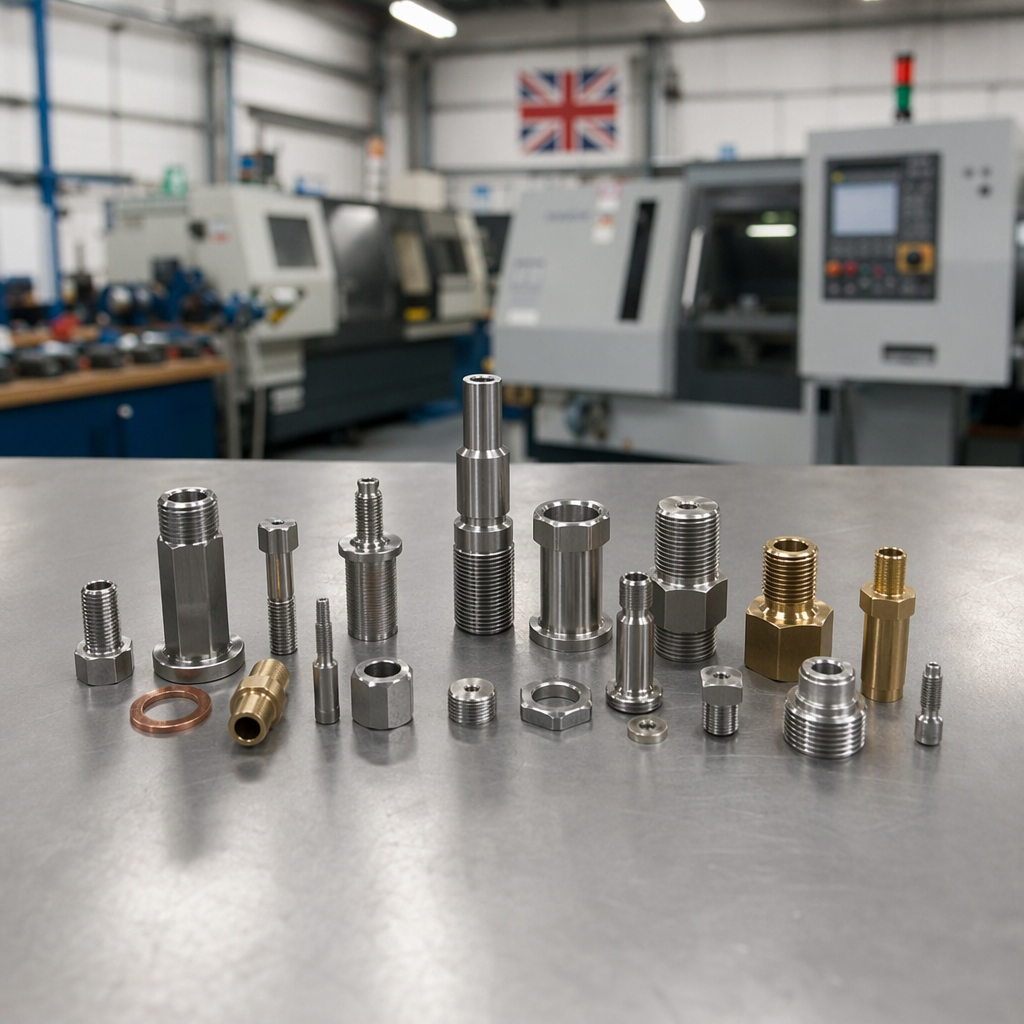
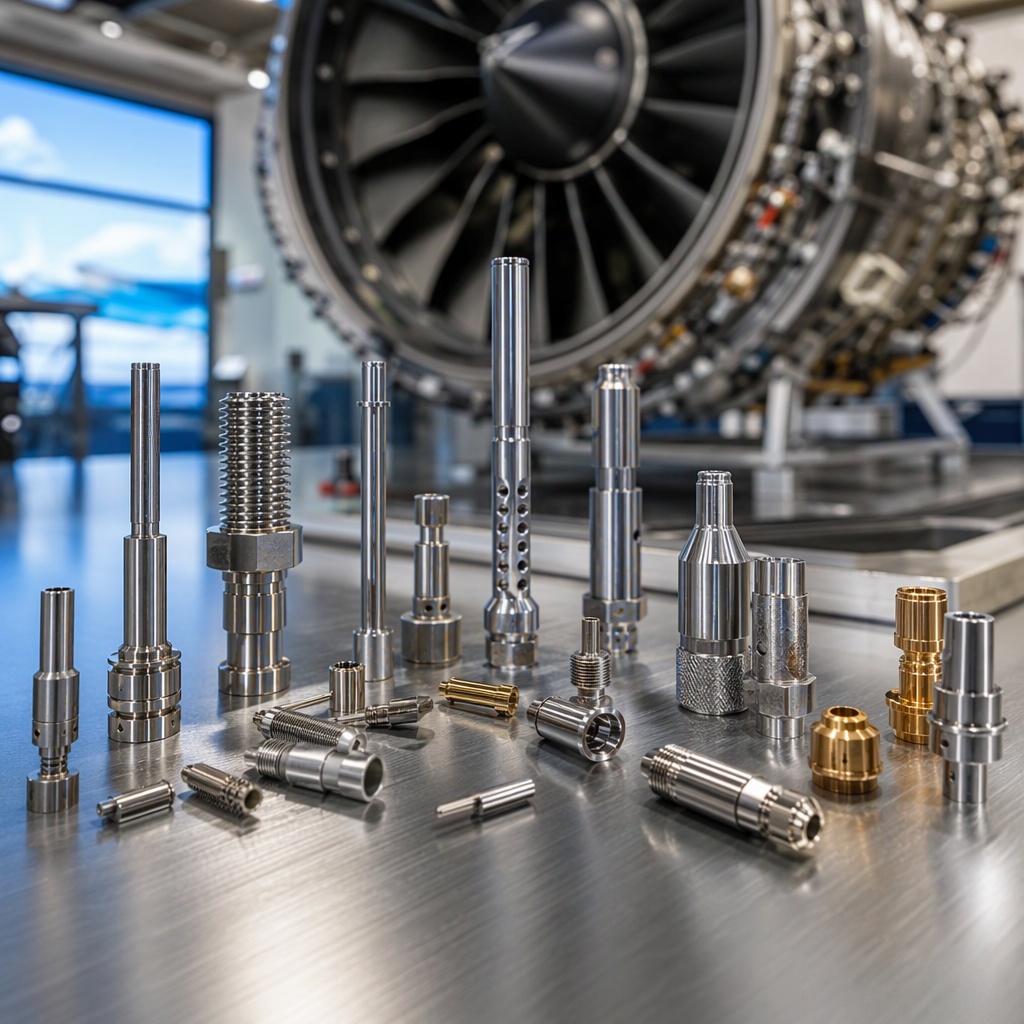
Precision turned fasteners and fittings are machined components produced to a defined specification. They often include threads, diameters, undercuts, flats, grooves or holes that must be held consistently from part to part.
In the UK, these parts are often bought when standard catalogue items will not suit the application. That may mean custom fasteners to OEM drawings, or fittings with specific material, geometry and inspection needs. Choosing a UK supplier can simplify communication, drawing review and traceability. The next sections explain the part types, materials and process in more detail.
Defining Precision Turned Fasteners and CNC Turned Fittings
A precision turned fastener is a machined fixing made to a drawing rather than bought as a standard stock item. A special fastener means a non-standard part produced for a specific application, geometry or material requirement. Examples include studs, pins or threaded items with added features.
CNC turned fittings are similar, but their function is usually connection, location, sealing support or fluid or mechanical interface. These parts may combine threads with cross-holes, grooves, flats or milled details. The key point is control of specification, not logos or catalogue branding.
CNC turning improves quality because the machine can hold repeatable dimensions while combining turning, drilling, milling and threading in one controlled cycle. Many parts can be completed in a single set-up, which helps reduce handling and supports consistent quality through production.
Key Materials and Their Advantages in UK Manufacturing
Material choice depends on the duty of the part, the environment and the drawing. Rotec states it machines aluminium, stainless steel, titanium, mild or carbon steel, brass or copper, and nickel superalloys. That range supports both general engineering and higher-specification work.
For buyers, the main question is simple: does the supplier machine the material your part needs, and can it link that material to the order record? That matters for custom fasteners and special fasteners where the material is part of the approval route, not just a line in product descriptions.
- Aluminium can help where low weight is important.
- Stainless steel, titanium and nickel superalloys are often chosen for more demanding service conditions.
- Brass or copper and mild or carbon steel can suit selected fittings and fasteners depending on specification.
How Are Precision Turned Fasteners Made Using Swiss (Sliding Head) CNC Lathes?
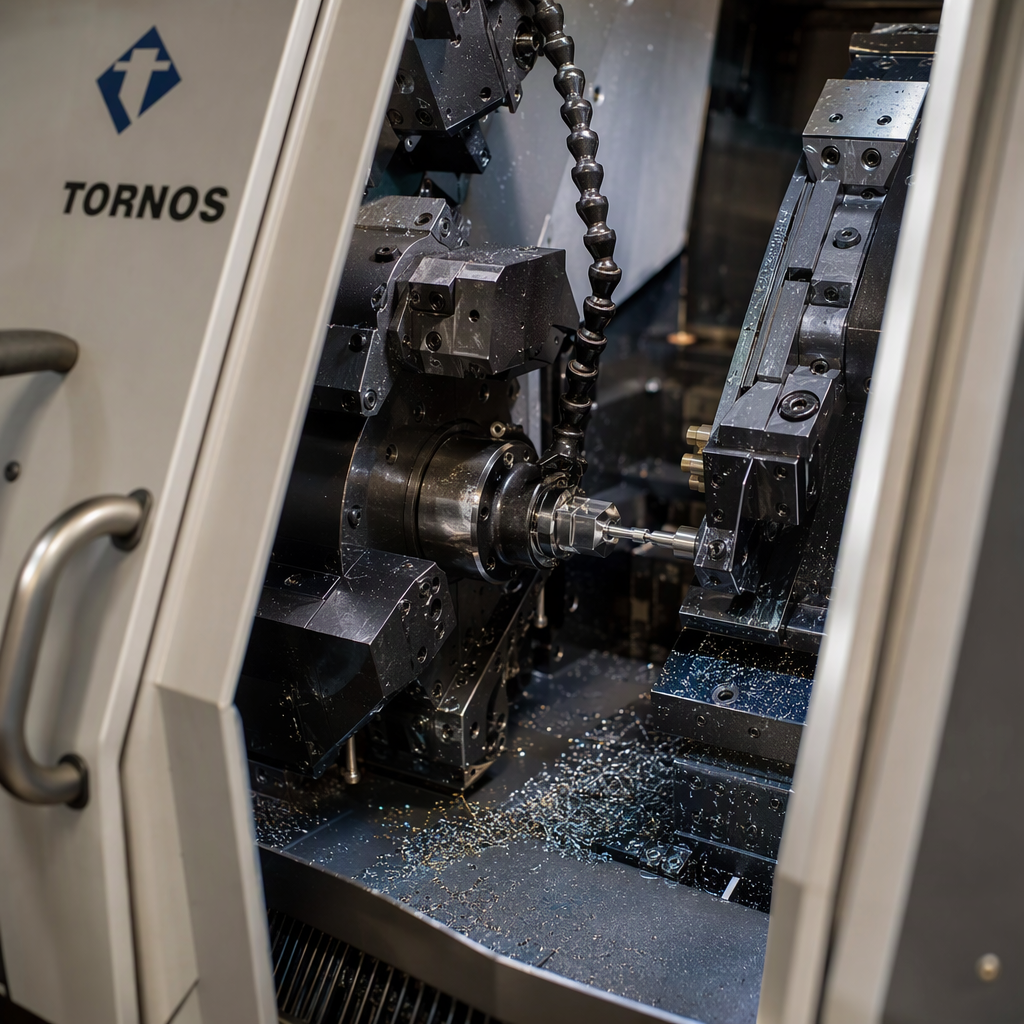
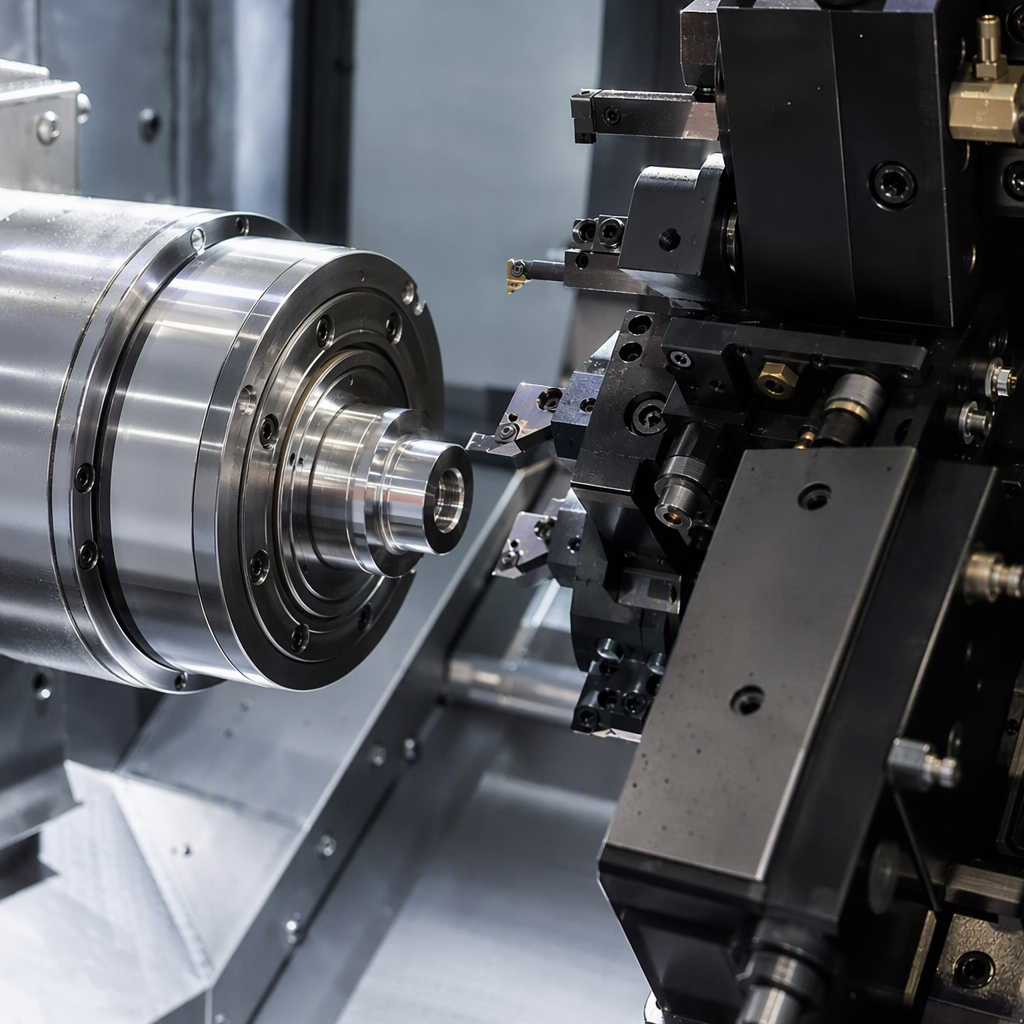
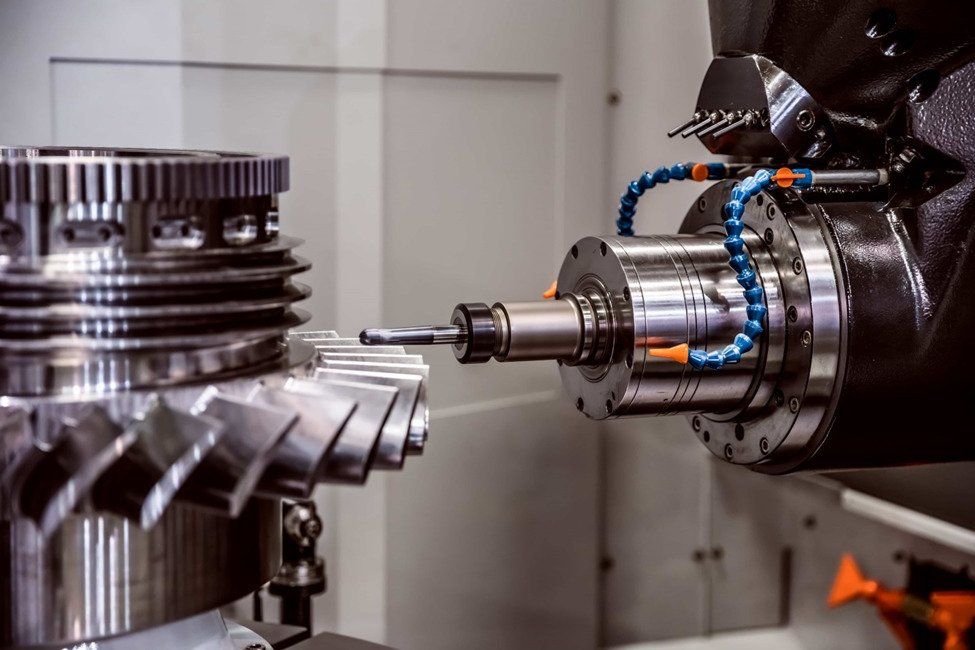
Swiss turning, also called sliding head turning, is a CNC process used for small, detailed cylindrical parts. In this method, the bar is supported close to the cutting area, helping the machine hold precision on slender components.
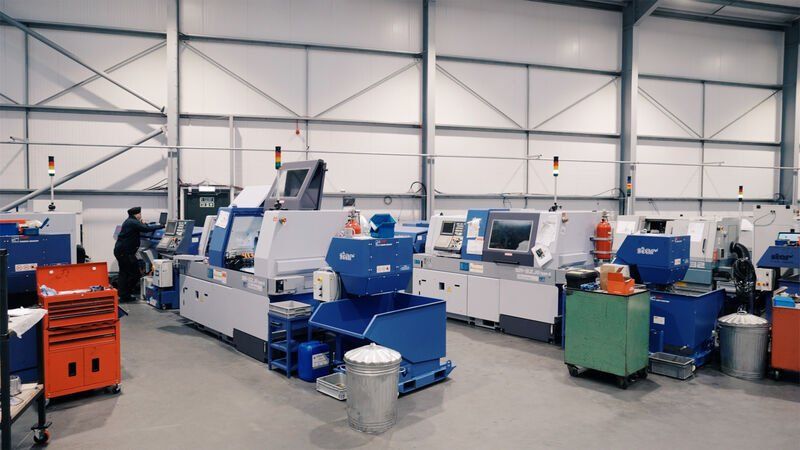
A guide bush is the support element that controls the bar near the tool point as it feeds through the machine. That support is one reason sliding head lathes are widely used for fasteners and fittings. At Rotec, automated sliding head machines run around the clock, supporting production capacity for repeat work and complex geometries.
The CNC Swiss Turning Process Explained for Buyers and Engineers
From a buyer’s view, the process starts with the drawing, material and part function. The CNC programme is then set to machine the required features from bar stock. Rotec’s fleet includes Star SR-20JII, Star SV-32, Star SR-32JIII Type B, Star SW20, Star SW12RII and Nakamura NTY-3.
Many parts are finished in a single set-up. That is useful when the drawing includes turned and secondary features together, because the machine can complete more of the stage of the manufacturing process without moving the part between operations.
- Bar stock feeds through the machine and is supported near the cut.
- Turning creates main diameters, shoulders and forms.
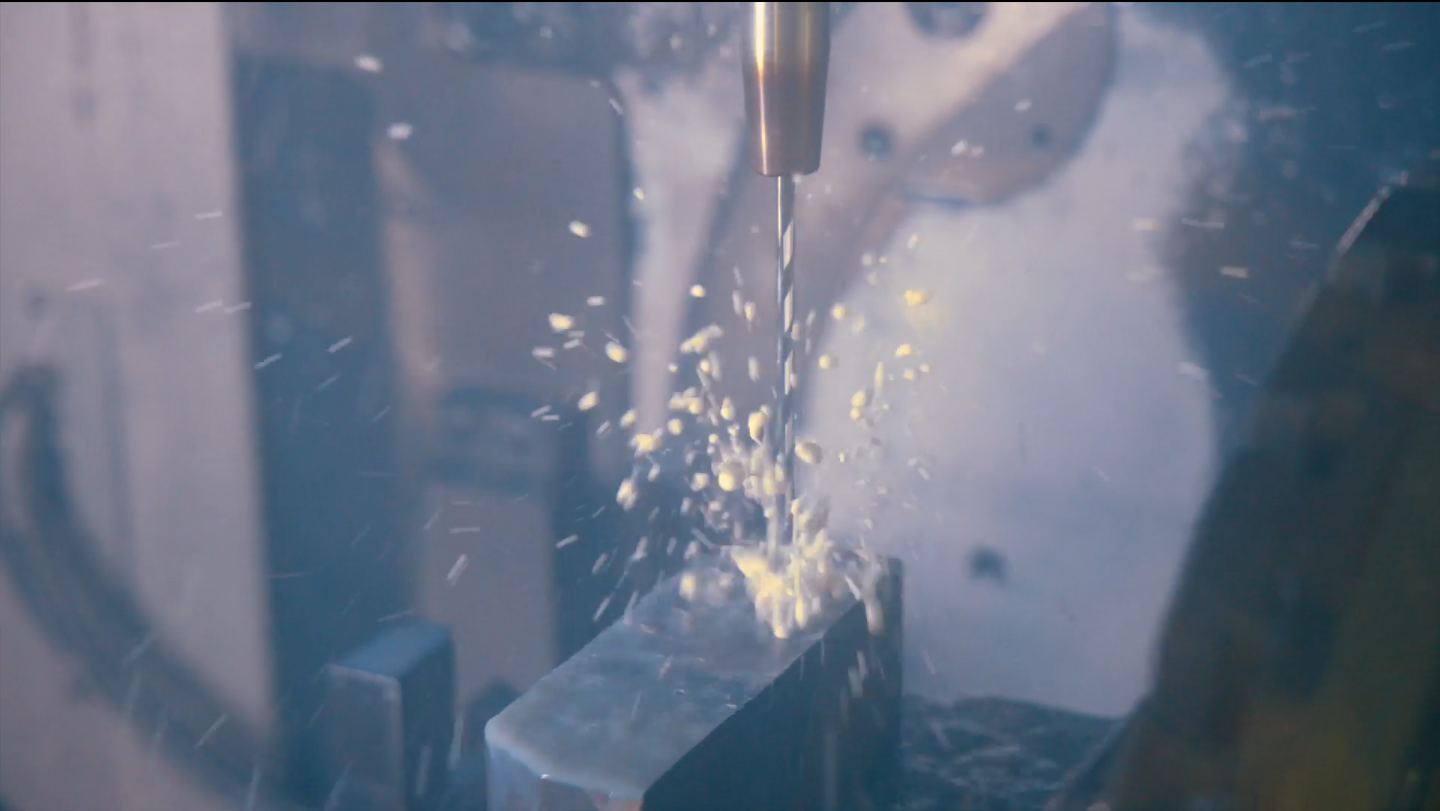
- Drilling, milling, threading and cross-drilling can be added in-cycle.
- Final geometry is produced to match OEM drawings and specifications.
This approach gives engineers a practical route to made-to-drawing parts with fewer process hand-offs and good repeatability.
What Types of Fasteners, Fittings, and Sectors Are Served by UK Manufacturers?
UK manufacturers supply a wide range of turned fasteners and fittings because many sectors need parts that are not available off the shelf. These components can be simple or highly specific, depending on the application, material and drawing.
Rotec serves aerospace, space and satellite, motorsport, military, rail, automotive, oil and gas, agricultural and industrial markets. That sector spread matters when you are assessing organisation, material familiarity and documentation discipline. The table below summarises common part types before looking at where they are used.
Table: Common Turned Fastener and Fitting Types, Features, and Sectors
Turned part families are usually defined by function and drawing features. In practice, buyers compare product descriptions, thread form, geometry and inspection needs rather than broad marketing labels. International standards may apply to selected thread or fastener requirements, but the drawing remains the main reference.
| Part type | Typical features | Typical sectors |
|---|---|---|
| Studs | External threads, plain shank, undercuts, lead-in chamfers | Aerospace, rail, industrial |
| Special screws and bolts | Turned shanks, threads, reliefs, head or drive-related features | Automotive, motorsport, oil and gas |
| Pins | Precision diameters, grooves, chamfers, cross-holes | Aerospace, military, agricultural |
| Bushes | Internal or external diameters, shoulders, grooves | Rail, industrial, automotive |
| Connectors and fittings | Threads, flats, cross-holes, sealing lands, milled details | Space and satellite, oil and gas, industrial |
These are generic examples only. Exact geometry, tolerances and material always depend on your specification and the intended service environment.
Aerospace, Motorsport, Rail, and Other Industries Using UK CNC Turned Parts
The sector mix tells you a lot about the type of work a supplier is set up to support. Rotec lists aerospace, space and satellite, motorsport including F1, military, rail, automotive, oil and gas, agricultural and industrial sectors. These are markets where drawing control and consistent output matter.
For buyers in Great Britain, a UK source can help reduce friction in the supply chain. It can also make drawing queries and inspection discussions easier to manage when requirements change between prototype and repeat production.
- Aerospace and space programmes often need strong traceability and controlled documentation.
- Motorsport and automotive programmes may value speed, repeatability and production capacity.
Rail, oil and gas, agricultural and industrial uses often depend on durable, application-specific turned parts.
How Do UK Suppliers Support Both Prototypes and Production Batches?
A capable supplier should support early samples as well as repeat orders. That matters when your part moves from drawing review and fit testing into planned supply.
In practical terms, support for prototypes and batches comes from machine availability, programming discipline and clear review of custom fasteners. Rotec operates 24 automated sliding head machines running around the clock, with staffed hours Monday to Friday 7:30am to 5pm.
Flexibility from One-Offs to High Volumes for Custom Fasteners
Bespoke work starts with the drawing. If your part has a non-standard thread, a cross-hole, a special diameter transition or a demanding material, the supplier needs to review those details before quoting. That is how custom fasteners are translated from OEM drawings into a workable machining route.
Rotec’s sliding head equipment can machine multiple features in one set-up, which supports both sample work and repeat manufacture. The stated component size range is 1 mm to 50 mm diameter, though this should be checked against the fleet because one listed machine feeds up to 42 mm bar.
Flexibility is not only about volume. It is also about how well the supplier manages revisions, material choice, traceability and inspection planning so the same part can move from first-off approval to regular supply with control and consistency.
What to Include With Your Enquiry for Accurate Quotes
Good quoting depends on clear technical input. If key data is missing, the price may be provisional or the review cycle will slow down. For made-to-drawing parts, the enquiry should let the supplier assess machining method, inspection needs and any commercial risk.
Send enough detail so the manufacturer can compare the drawing against machine capability, material availability and customer requirements. That helps both sides keep complete control of changes before production starts.
What to send with your enquiry:
- Drawing or CAD model, plus any revision status
- Material and full specification
- Quantity and expected call-off pattern
- Thread and tolerance callouts
- Finish, coating or plating requirement
- Certification and documentation needs
If you are comparing suppliers, ask whether they can support the exact material, thread form, inspection route and traceability level your part needs.
What Quality Standards and Certifications Should You Expect from a UK Supplier?
For precision turned parts, the basics are clear quality systems, inspection capability and documented compliance. If your sector is regulated or safety-critical, you should also check whether the supplier’s approvals match your application.
Rotec states AS9100 and ISO 9001:2015 accreditation, plus CMM inspection and traceability. For buyers comparing UK manufacturing sources, that combination is a useful starting point when assessing quality issues, audit readiness and the ability to support specification-led work. The next two sections cover what those approvals mean in practice.
AS9100, ISO 9001:2015, and Compliance in Precision Turned Parts Manufacturing
AS9100 and ISO 9001:2015 are quality management standards that buyers often look for when sourcing precision turned parts. In simple terms, they indicate that the business works within defined processes for control, review and continuous improvement.
For a UK supplier, those approvals do not replace the drawing. Instead, they support compliance around how orders are reviewed, how material and production records are handled, and how non-conformance is managed if an issue appears. That is important when the part is used in aerospace or other tightly controlled sectors.
Rotec states both AS9100 and ISO 9001:2015 accreditation. Combined with traceability and inspection capability, these approvals can help buyers assess whether the supplier is prepared for documented, repeatable manufacturing rather than ad hoc machining.
Inspection, Documentation, and Bespoke Certification Options
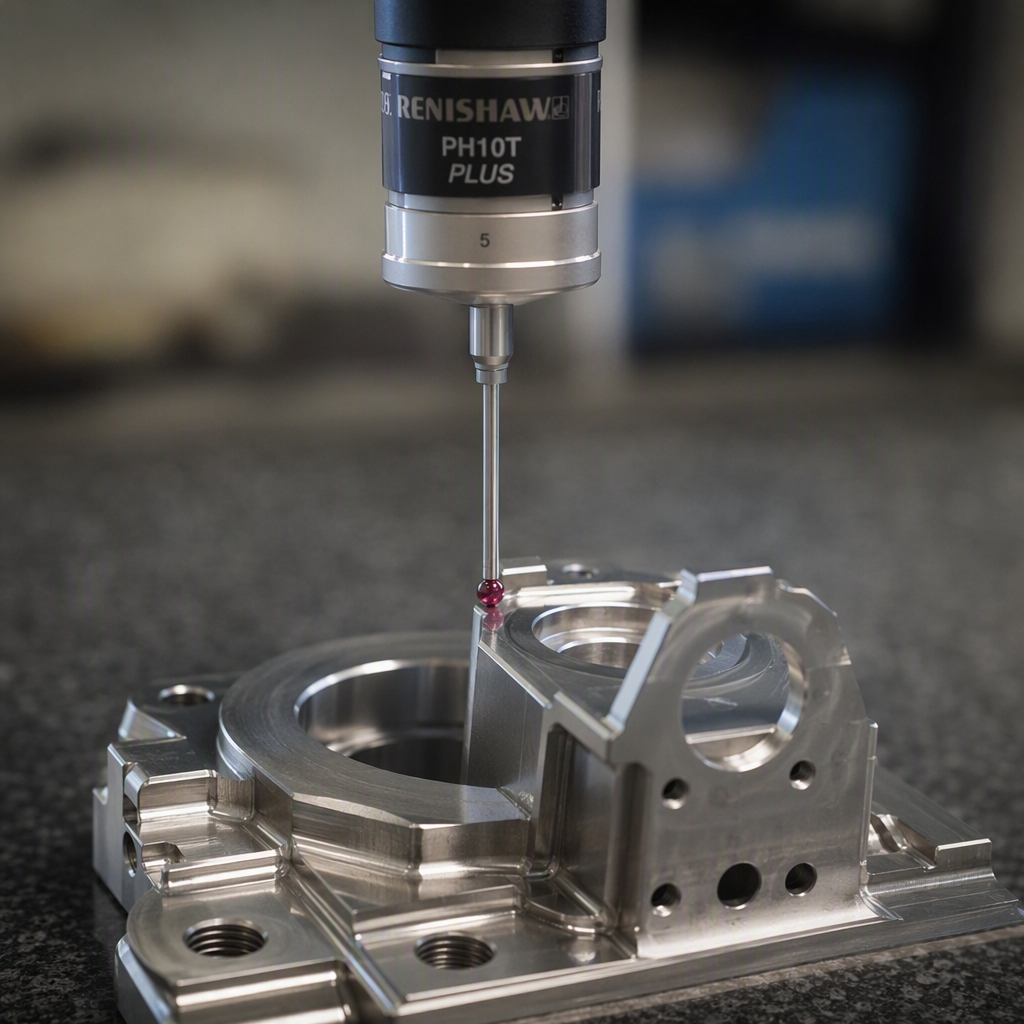
Inspection should match the risk and function of the part. For some components, standard dimensional checks may be enough. For others, you may need more detailed records linked to the order, material and revision level. Rotec states CMM inspection and traceability as part of its quality offering.
Documentation is where many sourcing decisions are won or lost. If the paperwork does not match the part, procurement and quality teams lose time.
Ask about:
- Inspection method and whether CMM reporting is required
- Material traceability and how records are retained
- Part-specific documentation or bespoke certification to customer requirements
This step helps align the inspection route with the actual function of the part before production begins.
Conclusion
In conclusion, precision turned fasteners and fittings play a crucial role in various industries, ensuring reliability and quality in critical applications. The benefits of utilising CNC Swiss turning for manufacturing these components include enhanced precision, the ability to work with a wide range of materials, and flexibility in production volumes. As you consider your options for suppliers in the UK, remember to assess their quality standards, traceability processes, and capability to support both prototypes and high-volume production. By partnering with a reputable manufacturer like Rotec Aerospace, you can ensure that your specific requirements are met with the utmost attention to detail. For a tailored quote, please send us your drawings today.
Have a part to quote? Send us your drawing with the material, quantity and documentation requirements, and we will review it with you.
Frequently Asked Questions
What are precision-turned fasteners and fittings?
Precision turned fasteners and fittings are small components machined from bar stock to a customer drawing. They typically include threads, controlled diameters, grooves, flats or cross-holes. Unlike catalogue items, they are made to a specific geometry, material and inspection requirement, so the drawing controls how the part is manufactured and checked.
Why is Swiss turning used for small fasteners and fittings?
Swiss turning supports the bar close to the cutting tool through a guide bush, which limits bending and vibration on slender parts. It can also turn, drill, mill, thread and cross-drill in one set-up, reducing handling and helping keep features consistent across a production run.
Which materials can Rotec turn for special fasteners?
Rotec states it machines aluminium, stainless steel, titanium, mild and carbon steel, brass and copper, and nickel superalloys. If your part has a defined material specification, include it with your enquiry so the team can review the drawing and confirm suitability before quoting.
Can a UK supplier handle both prototypes and production volumes?
Yes, if it has the capacity and process control to repeat the approved part reliably. Rotec lists rapid prototyping, CAD/CAM and stock holding among its services, running automated sliding head machines around the clock. Confirm quantities, lead times and call-off arrangements for your part when requesting a quote.
What certification and traceability can Rotec supply?
Rotec is accredited to AS9100 and ISO 9001:2015 and offers CMM inspection and traceability. The exact documentation package, such as material certificates or customer-specific certification, should be agreed during quotation so it matches the requirements of your sector and drawing.